
Added Sugar vs. Total Sugar on a Nutrition Panel

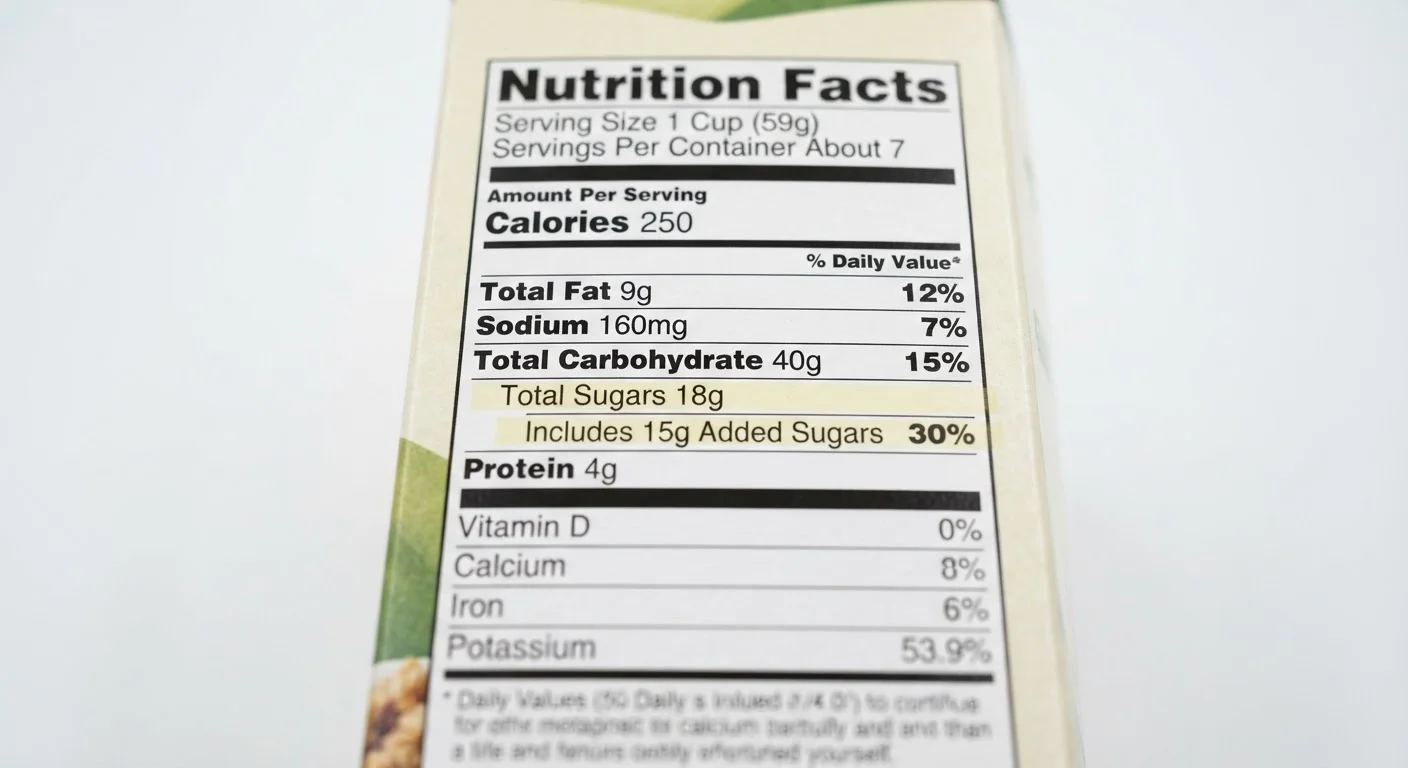
Photo: ArticleHood.com | Precision In Every Word editorial
Key Takeaways
- Total Sugar includes all sugars - both naturally occurring and those added during manufacturing.
- Added Sugar is the subset that manufacturers, processors, or cooks introduced; it does not include sugars inherent to whole ingredients.
- The FDA required Added Sugar to appear on Nutrition Facts panels starting in 2020 for large manufacturers.
- Dietary guidelines suggest limiting added sugars to less than 10% of daily calories.
- High total sugar from whole fruit is nutritionally different from the same gram count coming from added sweeteners.
- Ingredient lists can help you identify specific added-sugar sources by name.
What Each Number Actually Counts
Total Sugar is exactly what it sounds like: the sum of every gram of sugar present in a serving, regardless of where it came from. That includes sugars naturally present in milk (lactose), fruit (fructose and glucose), and vegetables, plus any sugars that were stirred in during manufacturing or preparation.
Added Sugar is a subset of that total. It counts only the sugars and syrups - including high-fructose corn syrup, honey, fruit juice concentrates, molasses, and table sugar - that were added to a food during processing or preparation. Sugars inherent to an intact ingredient, such as the fructose inside a whole blueberry or the lactose in plain milk, are not counted as added.
A plain, unsweetened yogurt may show 12 g of Total Sugar (all from lactose) and 0 g of Added Sugar. A flavoured version of the same yogurt might show 22 g Total Sugar and 10 g Added Sugar - the difference being the sweetener the manufacturer blended in. That gap is exactly what the Added Sugar line is designed to reveal. For a broader tour of how every row on a label works together, see our plain-language label guide.
| Criterion | Total Sugar | Added Sugar |
|---|---|---|
| What it measures | All sugars in one serving | Only manufacturer-introduced sugars |
| Includes natural sugars | Yes | No |
| Includes honey & syrups added during processing | Yes | Yes |
| Has a % Daily Value on label | No | Yes (based on 50 g/day limit) |
| Best use | Total carbohydrate tracking | Evaluating processing level |
| Required on US labels since | 1994 (NLEA) | 2020 (updated FDA rule) |
Why Regulators Decided Both Numbers Should Appear
Before the updated Nutrition Facts label rolled out - required for large manufacturers by January 2020 - only Total Sugar appeared. Consumers had no reliable way to tell whether the sugar in a product came from its core ingredients or from sweeteners added to enhance flavour, shelf life, or palatability.
The U.S. Food and Drug Administration added the Added Sugar line after reviewing evidence linking high intakes of added sugars to increased risk of conditions such as cardiovascular disease and type 2 diabetes, independent of total calorie intake. The scientific and public-health argument was straightforward: a gram of sugar from a whole strawberry arrives packaged with fibre, water, vitamins, and phytonutrients. A gram of sugar from corn syrup arrives largely alone. Both raise blood glucose, but their broader nutritional contexts differ meaningfully.
What Counts as an Added Sugar?
The Dietary Guidelines for Americans recommend that added sugars make up less than 10% of total daily calories. On a 2,000-calorie diet, that works out to roughly 50 g (about 12 teaspoons) per day. The Added Sugar row on the label now shows a % Daily Value based on that benchmark, giving you an at-a-glance comparison point.
To understand how this fits alongside other regulated versus loosely defined label claims, see what food labels are actually telling you.
Reading Both Numbers Together in Practice
The two figures are most useful when read in combination rather than in isolation.
- High Total Sugar, zero Added Sugar: Likely indicates naturally occurring sugars from dairy or fruit. Context matters - a smoothie made entirely from fruit still delivers a concentrated sugar load, even if none of it is "added."
- Low Total Sugar, low Added Sugar: Generally a good sign that a product is not heavily sweetened by either source.
- Large gap between Total and Added Sugar: Signals significant sweetener use. A product showing 30 g Total Sugar and 25 g Added Sugar is mostly sweetened by the manufacturer.
- Small gap, moderate totals: Suggests most sweetness comes from the food's natural ingredients.
The ingredient list is a useful companion. Added sugars must be listed as ingredients, so scanning for terms like cane sugar, dextrose, malt syrup, or fruit juice concentrate confirms what the Added Sugar row quantifies. Our guide to food additives and preservatives explains how to read ingredient lists more fluently.
17 tsp
Average daily added sugar intake for US adults
The CDC has reported that U.S. adults consume an average of about 17 teaspoons of added sugar per day - well above the recommended limit of roughly 12 teaspoons on a 2,000-calorie diet.
~35%
Share of added sugar coming from beverages
According to NHANES data analysed by the CDC, sugar-sweetened beverages - including soft drinks, fruit drinks, and energy drinks - account for roughly a third of added sugar intake among U.S. adults.
Neither number alone tells the whole story. A serving of dried mango with no added sugar can still contain 25 g of Total Sugar - worth knowing if you're eating several handfuls. Use both rows together, alongside serving size, to form an accurate picture. This is part of the broader skill covered in reading a nutrition label without getting lost in the numbers.
This article is for general informational purposes only and is not a substitute for personalised medical or dietary advice. If you have specific health conditions or dietary needs, consult a qualified healthcare professional.
The content on this site is for informational purposes only and is not a substitute for professional advice. Always consult a qualified professional for guidance specific to your situation.