
Plant-Based Meat: Ingredients, Processing, and Nutritional Trade-offs

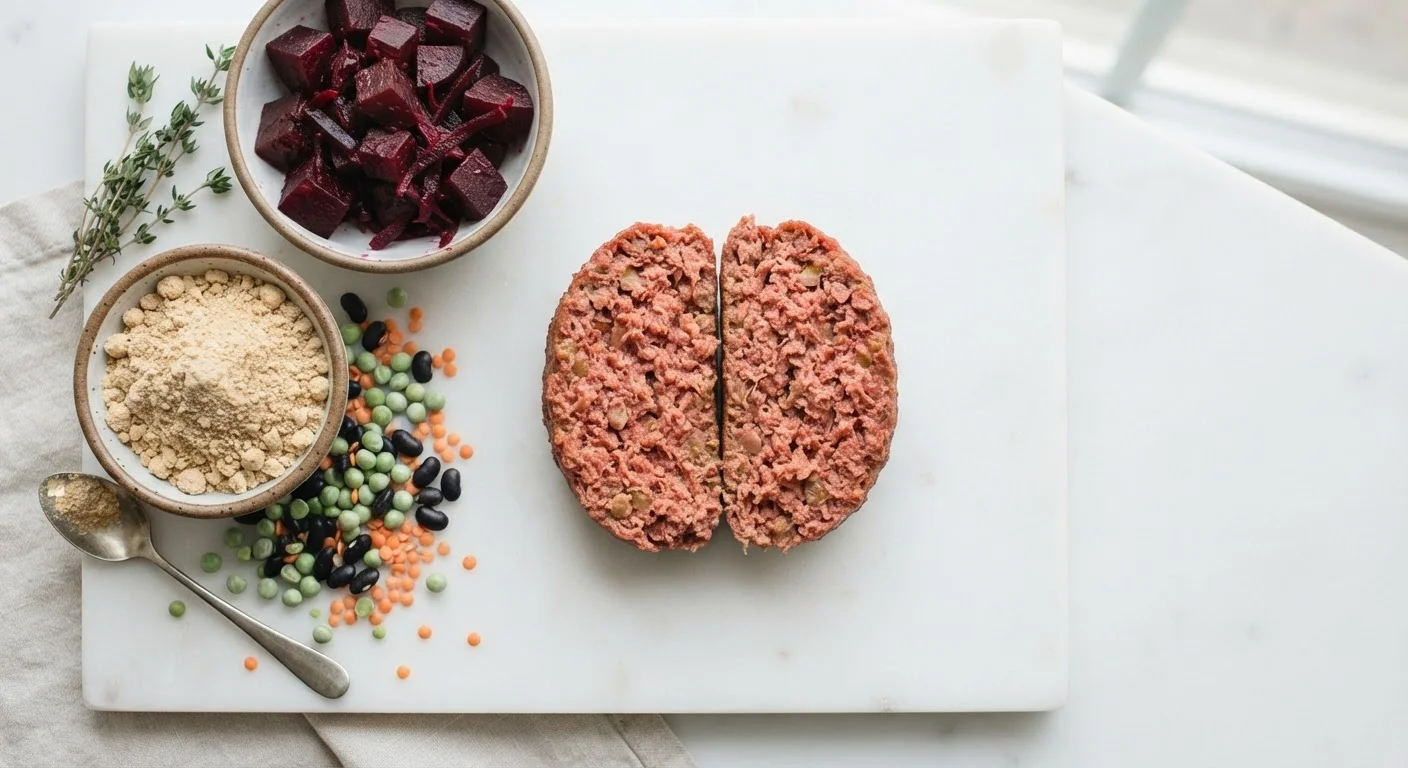
Photo: ArticleHood.com | Precision In Every Word editorial
Key Takeaways
- Plant-based meats are highly processed products, typically containing 15-20+ ingredients including isolates, binders, and colorants.
- They can match or exceed conventional meat's protein content but often carry more sodium.
- Saturated fat content varies widely depending on which oils are used in formulation.
- They offer meaningful environmental advantages but are not nutritionally equivalent to whole legumes.
- Most nutrition researchers recommend treating them as an occasional convenience food, not a daily staple.
Comparable protein content to ground beef
Many plant-based patties deliver 18-21 grams of protein per serving, similar to a comparable beef patty. Pea and soy protein isolates have amino acid profiles that approach - though don't always fully match - animal protein in terms of digestibility and essential amino acid ratios.
Contains no dietary cholesterol
Because they're fully plant-derived, these products contain zero dietary cholesterol. This may matter for people managing LDL cholesterol levels, though dietary cholesterol's effect on blood cholesterol is more nuanced than once assumed.
Often fortified with key micronutrients
Many products are formulated with added iron, zinc, and B12 - nutrients that can be harder to obtain when reducing animal foods. Fortification doesn't fully replicate bioavailability from animal sources but helps close gaps for some consumers.
Lower saturated fat than some beef cuts
Products using sunflower or canola oil as the primary fat source can have less saturated fat than an 80/20 ground beef patty, though those relying heavily on coconut oil may actually be comparable or higher.
High sodium content in most formulations
A single plant-based patty can contain 370-500 mg of sodium before any cooking additions or condiments. By comparison, a plain ground beef patty contains minimal sodium. Regular consumption can push daily sodium intake above recommended thresholds.
Significantly less fiber than whole legumes
The protein isolation process strips away most of the fiber naturally present in peas, soy, or lentils. A patty may deliver under 2 grams of fiber - far less than a comparable serving of whole beans or lentils, which deliver 8-10 grams.
Long and complex ingredient lists
Most products contain 15 or more ingredients, including methylcellulose, yeast extract, and various natural flavors. While these additives are generally recognized as safe by the FDA, long-term effects of combined additive exposure remain understudied.
Saturated fat varies unpredictably by brand
Coconut oil is widely used to mimic the fat behavior of beef, but it is high in saturated fat. Without reading individual product labels, consumers can't reliably predict saturated fat content, which complicates dietary planning.
Not nutritionally equivalent to whole plant foods
Framing plant-based meats as equivalent to beans, lentils, or tofu is misleading. Whole plant protein sources deliver fiber, phytonutrients, and lower sodium in a form that requires no industrial processing.
What's Actually Inside a Plant-Based Meat Product
Pick up a plant-based burger patty and the ingredient list tells a complex story. Most commercial products are built around one or more protein isolates - pea protein isolate is currently the most common, though soy, wheat gluten (seitan), mycoprotein (from fungi), and potato protein also appear. Isolates are extracted, concentrated forms of protein that have been separated from the rest of the source food through water, acid, or heat processing. The result is a high-protein ingredient that's lost most of its original fiber, vitamins, and other micronutrients.
Beyond protein, manufacturers add:
- Binders and texturizers - methylcellulose, potato starch, konjac, or carrageenan hold patties together and create a familiar mouthfeel.
- Fats - coconut oil and sunflower oil are common choices, contributing saturated fat and helping mimic the juiciness of ground beef.
- Colorants - beet juice extract and leghemoglobin (a yeast-fermented soy protein) create the reddish hue associated with raw meat.
- Flavors and sodium - natural flavor compounds, yeast extracts, and salt deliver savory depth and preserve shelf life.
For context on how this processing compares to the broader food spectrum, see our guide to processed food categories.
Nutritional Pros and Cons: A Side-by-Side Reality Check
Comparing plant-based meat to conventional beef requires honesty about what transfers well and what doesn't.
Comparable protein content to ground beef
Many plant-based patties deliver 18-21 grams of protein per serving, similar to a comparable beef patty. Pea and soy protein isolates have amino acid profiles that approach - though don't always fully match - animal protein in terms of digestibility and essential amino acid ratios.
Contains no dietary cholesterol
Because they're fully plant-derived, these products contain zero dietary cholesterol. This may matter for people managing LDL cholesterol levels, though dietary cholesterol's effect on blood cholesterol is more nuanced than once assumed.
Often fortified with key micronutrients
Many products are formulated with added iron, zinc, and B12 - nutrients that can be harder to obtain when reducing animal foods. Fortification doesn't fully replicate bioavailability from animal sources but helps close gaps for some consumers.
Lower saturated fat than some beef cuts
Products using sunflower or canola oil as the primary fat source can have less saturated fat than an 80/20 ground beef patty, though those relying heavily on coconut oil may actually be comparable or higher.
On the downside, several trade-offs deserve attention.
High sodium content in most formulations
A single plant-based patty can contain 370-500 mg of sodium before any cooking additions or condiments. By comparison, a plain ground beef patty contains minimal sodium. Regular consumption can push daily sodium intake above recommended thresholds.
Significantly less fiber than whole legumes
The protein isolation process strips away most of the fiber naturally present in peas, soy, or lentils. A patty may deliver under 2 grams of fiber - far less than a comparable serving of whole beans or lentils, which deliver 8-10 grams.
Long and complex ingredient lists
Most products contain 15 or more ingredients, including methylcellulose, yeast extract, and various natural flavors. While these additives are generally recognized as safe by the FDA, long-term effects of combined additive exposure remain understudied.
Saturated fat varies unpredictably by brand
Coconut oil is widely used to mimic the fat behavior of beef, but it is high in saturated fat. Without reading individual product labels, consumers can't reliably predict saturated fat content, which complicates dietary planning.
Not nutritionally equivalent to whole plant foods
Framing plant-based meats as equivalent to beans, lentils, or tofu is misleading. Whole plant protein sources deliver fiber, phytonutrients, and lower sodium in a form that requires no industrial processing.
370-500mg
Sodium per plant-based patty (typical range)
Nutritional label data from major commercial plant-based meat products sold in the US market.
~90%
Lower greenhouse gas emissions vs. beef
Life cycle analyses cited in peer-reviewed environmental science literature estimate significant GHG reductions, though figures vary by study and product.
18-21g
Protein per serving in leading products
Based on nutritional panels from widely available plant-based burger patties in the US, typically per 113g (4 oz) serving.
Understanding protein needs across your life stage matters when evaluating any protein source - see protein requirements by age for a fuller picture.
Processing Level: What It Means for Your Health
Plant-based meats fall squarely in the ultra-processed food (UPF) category under the NOVA classification system - a framework used by nutrition researchers to group foods by the extent and purpose of their processing, not simply whether they were processed at all. Ultra-processed foods typically combine multiple refined ingredients with additives not used in home cooking.
NOVA Classification: A Useful but Debated Tool
This classification doesn't automatically make plant-based meats harmful, but it does place them in a research category that epidemiological studies have associated with higher intake of sodium, saturated fat, and food additives. Some researchers argue the NOVA system oversimplifies; others contend the association with poorer health outcomes is real, even when controlling for overall diet quality. The honest answer is that long-term data on plant-based meat specifically is still accumulating.
For a broader look at what processed versus whole food labels really tell us, this breakdown explains the distinction clearly.
Environmental Context and the Bigger Dietary Picture
One of the stronger, better-documented arguments for plant-based meats is environmental rather than nutritional. Life cycle analyses generally show that producing plant-based meat generates significantly fewer greenhouse gas emissions, uses less land, and requires less water than producing conventional beef - though the exact figures vary by product and methodology.
That said, environmental benefit alone doesn't determine whether a food fits your dietary goals. Whole legumes - lentils, black beans, chickpeas - deliver comparable protein with far lower sodium, more fiber, and no need for industrial extraction processes. If environmental and health outcomes both matter to you, comparing plant-forward and omnivorous eating patterns gives a grounded overview of the current research.
For people with busy schedules who want convenient options without sacrificing nutritional variety, practical strategies for sustainable eating can help put these products in realistic context. And for guidance on balancing any meal - plant-based or otherwise - these plate-building principles offer flexible, evidence-grounded tools.
This article is for general informational and educational purposes only and is not a substitute for personalized dietary or medical advice. Consult a registered dietitian or qualified healthcare provider for guidance specific to your health needs.
The content on this site is for informational purposes only and is not a substitute for professional advice. Always consult a qualified professional for guidance specific to your situation.