
Simmering vs Boiling: Why the Right Heat Level Makes or Breaks a Dish

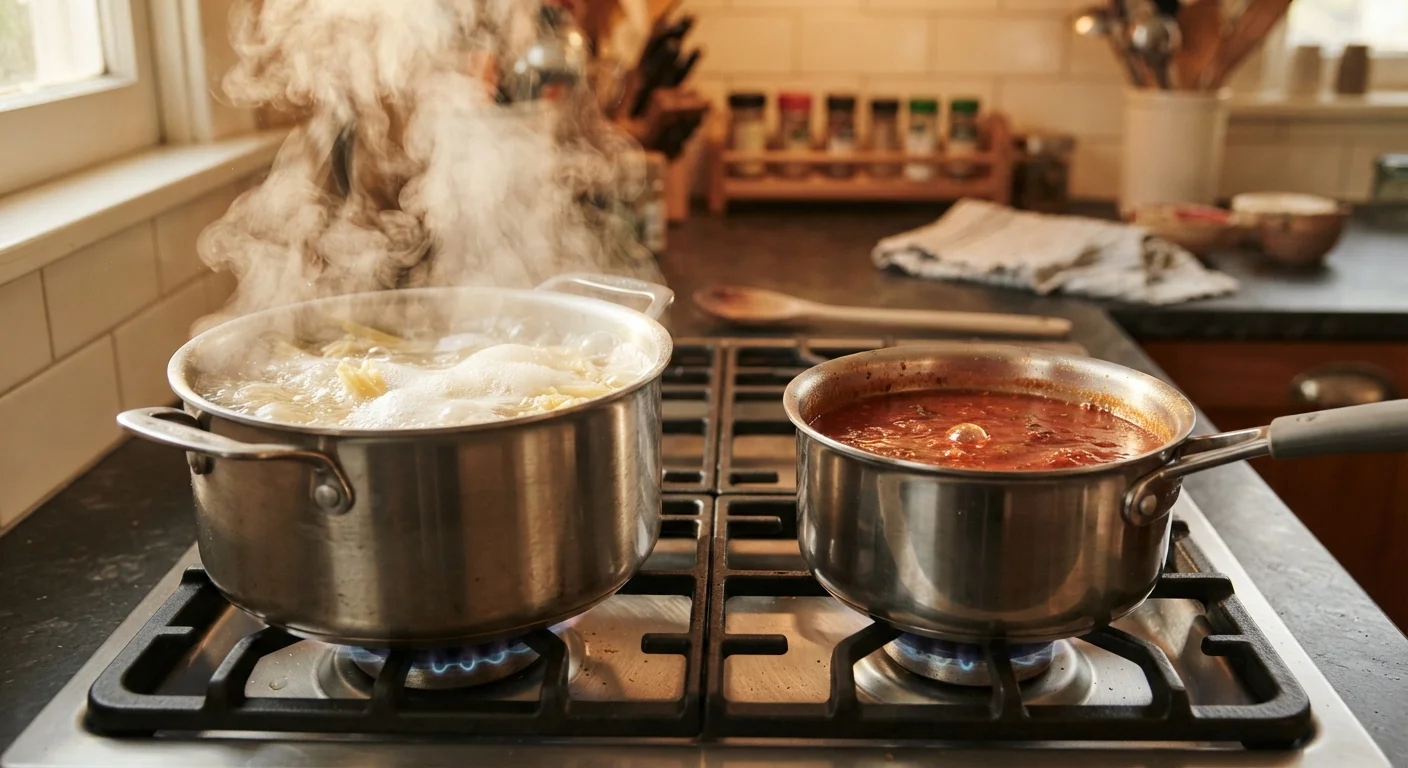
Photo: ArticleHood.com | Precision In Every Word editorial
Key Takeaways
- Simmering sits between 180°F and 205°F; boiling occurs at 212°F at sea level.
- Boiling agitates food aggressively, which can break apart delicate proteins and cloud a stock.
- Simmering extracts flavor and breaks down connective tissue gently, over a longer time.
- Using the wrong heat level is one of the most common reasons a dish turns out tough, mushy, or bland.
- Visual cues - bubble size, frequency, and steam - reliably tell you which state your liquid is in.
What Each Heat Level Actually Means
Water boils at 212°F (100°C) at sea level - the point where it turns to steam and bubbles break the surface continuously and vigorously. A rolling boil is one that cannot be stirred down; the whole surface churns. Simmering, by contrast, sits roughly between 180°F and 205°F. You'll see small, lazy bubbles rising intermittently, with wisps of steam. Some cooks call the upper end of this range a "gentle boil," but the key distinction is energy: simmering is low-agitation heat, boiling is high.
Altitude matters here too. At higher elevations, water boils at lower temperatures because atmospheric pressure decreases - something worth knowing if your pasta is taking longer than the package suggests. For a deeper look at how temperature affects food safety in general, see our guide to kitchen temperature rules.
| Criterion | Simmering | Boiling |
|---|---|---|
| Temperature range | 180°F - 205°F | 212°F (at sea level) |
| Bubble activity | Small, occasional bubbles | Vigorous, continuous rolling bubbles |
| Best for | Soups, stews, braises, stocks | Pasta, eggs, blanching vegetables |
| Effect on proteins | Gradually tenderizes collagen | Can toughen and dry out proteins |
| Effect on stock clarity | Keeps liquid clear | Clouds the liquid |
| Speed | Slower; benefits from time | Faster; efficient for quick cooking |
What Each Heat Does to Food
The reason heat level matters so much is that water in motion is an abrasive force. At a full boil, proteins are jostled and broken apart, starches release more rapidly, and delicate items disintegrate. That's fine for pasta - you want the starch to hydrate evenly. It's a problem for a whole chicken leg, where the muscle fibers seize up and turn rubbery under fierce heat.
Simmering works more like persuasion. Collagen - the tough connective tissue in cheaper cuts of meat and bones - needs sustained heat over time to convert into gelatin, which is what makes a braise or a stock rich and silky. You can't rush that conversion with a rolling boil; you'll only drive out moisture and end up with something dry and stringy. Most recipe failures trace back to exactly this kind of heat misjudgment.
~180°F
Minimum temperature for an active simmer
Below this point, heat is present but insufficient to drive most stovetop cooking processes effectively.
212°F
Boiling point of water at sea level
This drops by roughly 1°F for every 500-foot gain in elevation, which can meaningfully affect cooking times.
160-180°F
Optimal range for collagen-to-gelatin conversion
Food scientists note that this sustained low-heat range is what transforms tough cuts into tender, rich braises over time.
Reading the Visual Cues
You don't need a thermometer to tell them apart - your eyes are enough once you know what to look for:
- Below a simmer (under ~180°F): No visible bubbles; heat is there but inactive. Water is hot but not working hard enough for most cooking tasks.
- Simmer (~180-205°F): Small, sporadic bubbles rising from the bottom, gentle surface movement, steady steam. This is the sweet spot for stocks, stews, and grains.
- Full boil (212°F): Constant, vigorous bubbling across the whole surface that can't be calmed by stirring. Right for pasta, blanching, and rapid reductions.
Learning to adjust your burner dial to hold a simmer - rather than letting the pot climb to a boil - is one of the most practical skills in everyday cooking. For more on translating dial settings to real results, our stovetop heat guide walks through it step by step.
Lids Change Everything
Common Mistakes - and How to Correct Them
The most frequent error home cooks make is starting at a boil and never turning it down. A recipe that says "bring to a boil, then simmer" means exactly that - once you hit a boil, reduce the heat right away. Leaving it at full boil for a 90-minute stew will evaporate your liquid too quickly, overwork the proteins, and leave you with less depth of flavor, not more.
The opposite mistake happens with pasta: cooking it at a lazy simmer rather than a rolling boil causes the pasta to absorb water unevenly, producing a gluey or mushy result. Boiling water also returns to temperature more quickly after you add cold pasta, keeping cook time consistent. These principles apply similarly to sautéing and frying techniques - understanding how heat behaves across different cooking methods builds overall confidence in the kitchen.
This article is for general informational and educational purposes only. Always use proper food safety practices and consult a qualified culinary or health professional for guidance specific to your situation.
The content on this site is for informational purposes only and is not a substitute for professional advice. Always consult a qualified professional for guidance specific to your situation.