
Why Recipes Fail: The Real Reasons Behind Undercooked, Overcooked, and Flavourless Food

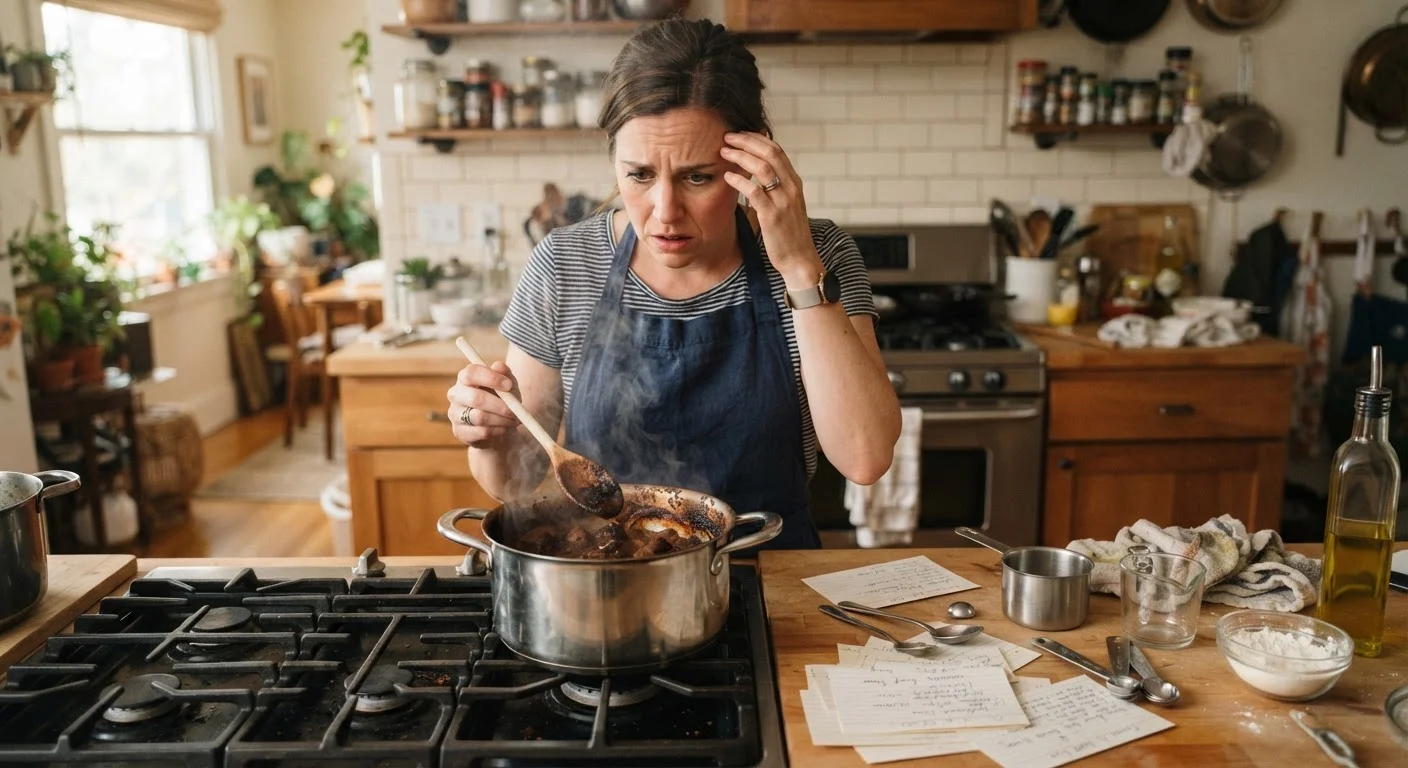
Photo: ArticleHood.com | Precision In Every Word editorial
Key Takeaways
- Oven and stovetop temperatures are rarely as accurate as their dials suggest - always verify with a thermometer.
- Seasoning at the wrong stage of cooking is one of the most common reasons food tastes flat.
- Reading a recipe once through before you start cooking prevents most timing and technique errors.
- Ingredient size and temperature at the start of cooking significantly affect how evenly food cooks.
Why Good Recipes Don't Always Produce Good Results
A recipe is a set of instructions written by someone cooking in a specific kitchen, with specific equipment, under specific conditions. When you follow the same recipe in your kitchen, you're working with different variables - and that gap is where most failures happen.
The good news is that recipe failures almost never come from bad luck or missing some innate cooking talent. They trace back to a manageable set of predictable causes. Understanding those causes lets you troubleshoot in real time and improve meal after meal. For a broader look at how cooking folklore can lead you astray, see our guide to common cooking myths.
Trusting the oven dial without checking actual temperature.
Adding all seasoning at the end of cooking rather than building it in layers.
Cooking protein straight from the refrigerator without allowing it to rest at room temperature first.
Ignoring inconsistent ingredient size, especially when chopping vegetables.
Opening the oven or lifting the lid repeatedly during cooking.
Using a pan that is too small or overcrowding it.
How to Use These Insights to Cook More Confidently
Awareness of these patterns changes how you approach a recipe from the start. Before you cook anything, read the entire recipe - not just to gather ingredients, but to understand the sequence, flag unfamiliar techniques, and spot timing overlaps. Our prep checklist for stress-free meals walks through exactly this process.
25-50°F
Typical home oven temperature variance
Consumer oven testing consistently shows that home ovens frequently run hotter or cooler than their set temperature, often by this margin.
~1 in 3
Home cooks who skip reading the full recipe first
Culinary educators frequently cite skipping the full recipe read-through as one of the most common self-reported mistakes among beginner and intermediate home cooks.
Heat management deserves special attention. Low, medium, and high on your stovetop dial are guidelines, not guarantees - every burner behaves differently. Understanding how heat actually works across common cooking tasks is one of the highest-leverage skills you can develop. The same applies to food safety: knowing safe internal temperatures protects your household and builds confidence about doneness. Our food safety temperature guide explains the reasoning without jargon.
Don't Guess on Doneness for Proteins
Every failed dish is data. If something turned out dry, ask whether it overcooked, whether the cut of meat was too lean, or whether it rested long enough. If something tasted flat, consider where salt was - or wasn't - added. This kind of reflective habit is what separates cooks who improve from those who repeat the same mistakes.
This article is for general informational and educational purposes only. It does not constitute professional culinary or nutritional advice. For personal dietary needs, consult a registered dietitian or qualified healthcare professional.
The content on this site is for informational purposes only and is not a substitute for professional advice. Always consult a qualified professional for guidance specific to your situation.