
Lighting Layers: Ambient, Task, and Accent Explained

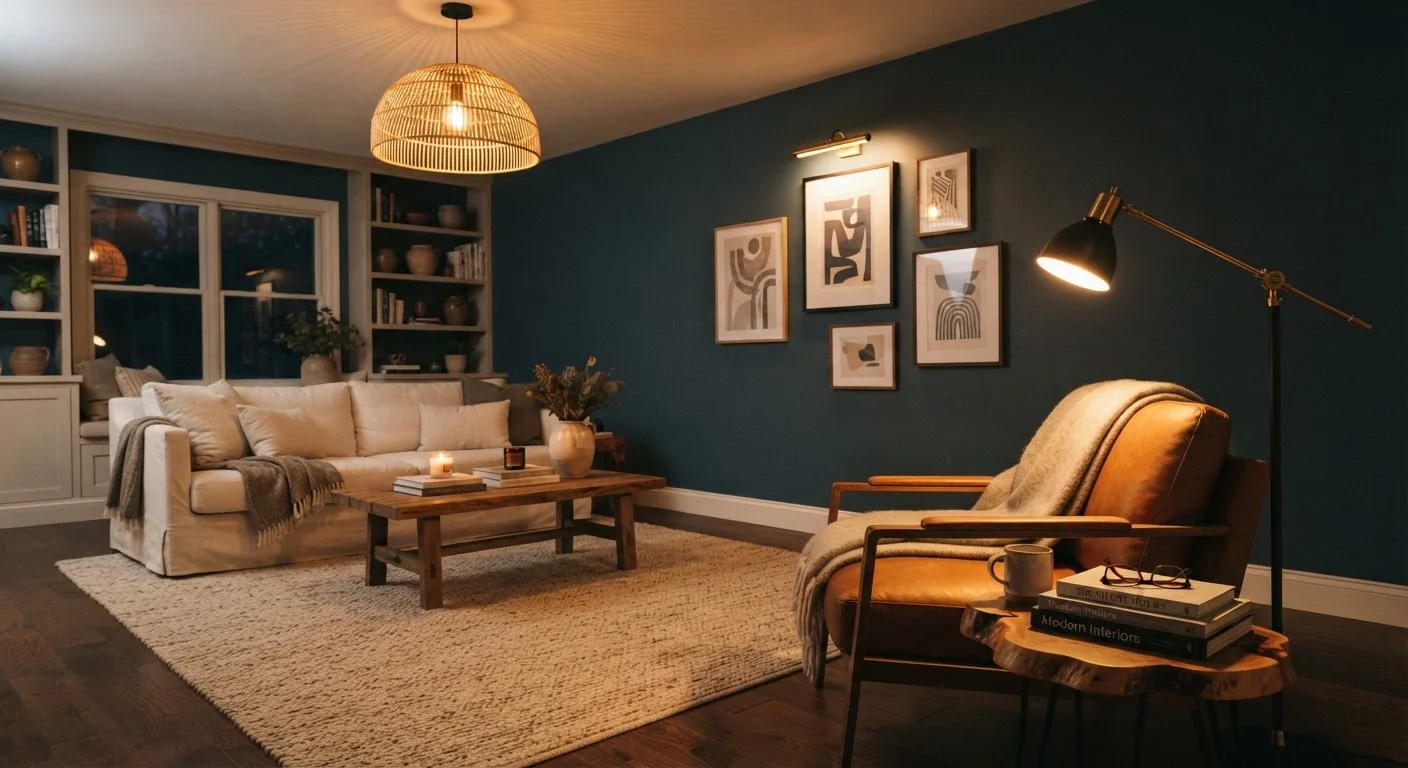
Photo: ArticleHood.com | Precision In Every Word editorial
Key Takeaways
- Ambient lighting is the baseline layer that provides general illumination for a room.
- Task lighting is focused and functional, designed for specific activities like reading or cooking.
- Accent lighting draws the eye to artwork, architecture, or decorative features.
- Combining all three layers gives you control over both mood and practicality.
- Dimmer switches help you shift between lighting needs throughout the day.
Why One Light Source Is Never Enough
Walk into a room lit by a single overhead fixture and you'll notice it immediately - harsh shadows, flat surfaces, and a slightly institutional feel. That's what happens when a room relies on just one light source to do everything at once. Good lighting design solves this by distributing different kinds of light throughout a space, each doing a specific job.
The three-layer approach is the foundation of how interior designers think about light. It isn't complicated or expensive to apply - it's simply a framework for asking: What does this room need light to do? Understanding the answer starts with knowing what each layer is for. Just as texture adds depth to a room, layered lighting adds dimension you can actually feel.
Natural Light Counts Too
Ambient Lighting: The Foundation
Ambient light is the base layer - the general illumination that allows you to see and move around a room safely. Think of it as the equivalent of natural daylight inside your home. It doesn't do anything especially dramatic, but without it, every other layer falls apart.
Common sources of ambient light include ceiling-mounted fixtures, flush-mount lights, recessed lighting spread evenly across a ceiling, and chandeliers. The goal is even, comfortable coverage without deep shadows or glare. A dimmer switch paired with your ambient source is one of the most useful upgrades you can make, since it lets you dial the intensity up for cleaning or down for a relaxed evening.
~10-15%
Energy saved by dimming lights 25%
According to the U.S. Department of Energy, dimming lights by just 25% can reduce energy use by roughly 10-15% while also extending bulb life.
2700-3000K
Ideal color temperature for ambient home lighting
The Illuminating Engineering Society recommends warmer color temperatures in this range for residential ambient lighting to support relaxation and visual comfort.
Task Lighting: Light That Works
Task lighting is exactly what it sounds like - light designed to help you do something specific. Reading, chopping vegetables, applying makeup, reviewing paperwork: these activities all require more focused, brighter illumination than ambient light alone can provide.
Desk lamps, under-cabinet kitchen lights, vanity strips around a bathroom mirror, and adjustable floor lamps beside a reading chair are all task-lighting solutions. The key quality of good task lighting is that it reduces eye strain by illuminating your work surface directly without casting shadows across it. Position your source so the light falls in front of you rather than from behind, which would throw your own shadow onto your work.
Because task needs vary by room, this layer is also the most personal. A home office calls for different task lighting than a sewing corner or a kitchen island. Think about what activities actually happen in each room before choosing fixtures. This pairs naturally with considering how your color palette interacts with light across different times of day.
Accent Lighting: The Decorative Layer
Accent lighting is the layer most people skip - and also the one that makes the biggest visual difference when added. Its job is to draw attention: to a piece of artwork, a built-in bookshelf, an interesting wall texture, or an architectural detail like a fireplace surround.
Spotlights, directional recessed fixtures, picture lights mounted above framed art, and even LED strip lighting tucked behind shelving all qualify as accent lighting. A general rule of thumb in lighting design is that accent sources should be roughly three times brighter than the ambient light they're contrasting against - that difference in intensity is what makes an object or surface visually 'pop.'
Accent lighting also works alongside other design principles. If you're grouping objects on a shelf using the rule of three, a small directed spotlight makes that arrangement a true focal point rather than just a decorative afterthought.
Start With One Accent Light
Putting All Three Layers Together
The real payoff of understanding these layers is flexibility. Once you have ambient, task, and accent sources in place, you can mix and match them to shift the entire character of a room. Dim the overhead ambient light, leave the accent light on, and a living room that felt bright and casual at noon becomes warm and intimate by evening - with no redecorating required.
A practical starting point: walk through each room in your home and identify which layer is missing. Most rooms already have ambient light of some kind. The gap is usually task or accent. Adding a single well-placed lamp or a small picture light can close that gap immediately. In smaller rooms, thoughtful lighting is one of the most effective tools available - see how it works alongside other strategies in our guide to making small rooms feel larger.
Frequently Asked Questions
The content on this site is for informational purposes only and is not a substitute for professional advice. Always consult a qualified professional for guidance specific to your situation.