
Natural Cleaners vs. Chemical Cleaners: What Actually Works Where

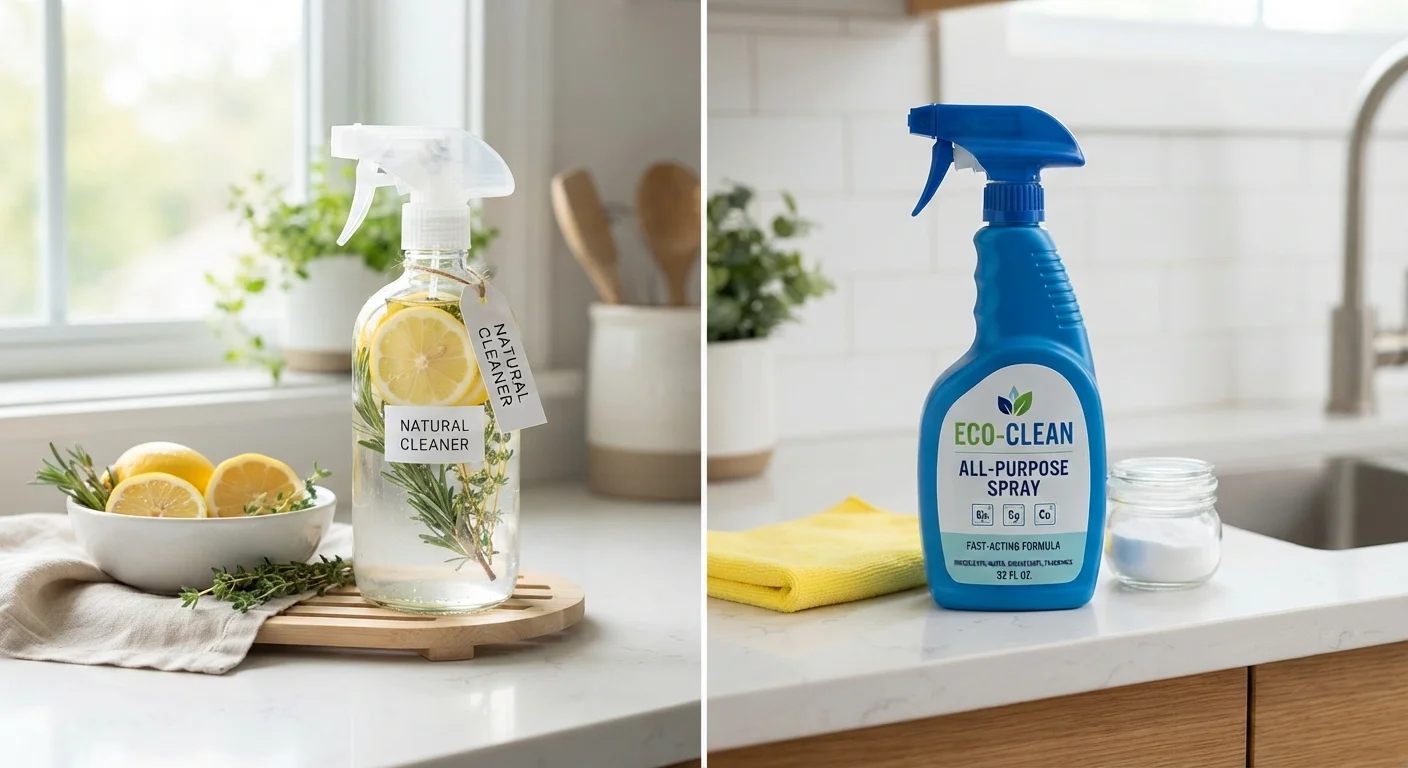
Photo: ArticleHood.com | Precision In Every Word editorial
Key Takeaways
- Natural cleaners remove everyday dirt effectively but typically cannot disinfect surfaces on their own.
- Chemical cleaners carry stronger active ingredients that can be hazardous if misused or mixed improperly.
- No single cleaner type is best for every surface - matching product to task is what matters most.
- Ventilation and surface compatibility matter regardless of whether a cleaner is natural or chemical.
- Understanding the difference between cleaning and disinfecting helps you choose the right tool each time.
What Each Category Actually Contains
The labels "natural" and "chemical" are widely used but often misunderstood. Every substance - including water - is technically a chemical. In household cleaning, natural cleaners generally refer to products whose active ingredients come from plant, mineral, or naturally derived sources: citric acid, castile soap, essential oils, and enzymes are common examples. Chemical cleaners is the informal term for conventional products formulated with synthesized compounds - bleach (sodium hypochlorite), quaternary ammonium compounds (quats), glycol ethers, and synthetic surfactants among them.
Neither category is monolithic. A natural cleaner can still irritate skin or damage certain surfaces. A chemical cleaner used as directed in a ventilated space poses manageable risk. The issue is that marketing language frequently overstates both the safety of natural options and the necessity of industrial-strength chemical ones. Understanding what's actually in a product helps you match it to the job - and avoid misuse. For a closer look at one related ingredient concern, see our fragrance-free trade-offs guide.
Where Natural Cleaners Genuinely Perform Well
Natural cleaners shine in routine, low-stakes cleaning tasks - wiping down kitchen counters after cooking, cleaning glass and mirrors, freshening bathroom surfaces between deep cleans, and removing light food residue. Enzyme-based formulas are particularly effective at breaking down organic matter like food spills and pet accidents, often outperforming conventional sprays for those specific tasks.
They're also a sound choice for surfaces where harsh chemistry causes damage. Natural stone countertops (granite, marble, travertine) are etched by acidic or highly alkaline products; a pH-neutral plant-based cleaner is far less likely to cause that harm. The same logic applies to unsealed hardwood floors, painted surfaces, and older fixtures with delicate finishes.
One realistic limitation: most natural cleaners do not meet the EPA's definition of a disinfectant. They can reduce surface bacteria through physical removal - which is genuinely valuable - but they don't reliably kill pathogens to the standard required in higher-risk situations. Understanding what disinfecting actually means can help you decide when that distinction matters.
| Criterion | Natural Cleaners | Chemical Cleaners |
|---|---|---|
| Active ingredients | Plant-derived acids, enzymes, castile soap | Bleach, quats, synthetic surfactants, solvents |
| Disinfection ability | Generally not EPA-registered disinfectants | Many are EPA-registered; kill pathogens |
| Heavy grease & mold | Limited; may require repeated effort | Strong performance with correct product |
| Delicate surface safety | Lower risk; gentler pH range | Higher risk of etching or discoloration |
| Indoor air quality impact | Generally lower VOC output | Can release VOCs; ventilation required |
| Ingredient transparency | Often clearly labeled; easier to assess | Varies; some formulas less transparent |
| Everyday soil removal | Effective for routine dirt and residue | Effective, but often more than needed |
Where Chemical Cleaners Have the Edge
Conventional chemical cleaners are formulated for harder jobs and higher-stakes hygiene situations. Bleach-based products and EPA-registered disinfectants are proven to kill a broad range of bacteria and viruses when used correctly - this is why they're standard in healthcare and food-service environments, and why they're worth reaching for at home after raw poultry contact or during a contagious illness.
For heavy buildup - grease-coated stovetops, tile grout stained with mold, hard water scale on fixtures - alkaline degreasers, oxidizing agents, and acid-based descalers do work that diluted plant-based options typically can't match without significant scrubbing and repeated applications. Efficiency is a real factor when you're cleaning under time pressure.
The trade-off is exposure risk. Many conventional cleaners release volatile organic compounds (VOCs) during use, and some common combinations produce genuinely hazardous reactions. Mixing cleaning products is more dangerous than most people assume - bleach and ammonia, for instance, react to form chloramine gases. Adequate ventilation and careful storage aren't optional safety theater; they're necessary practice.
~33%
Share of cleaning products with VOC concerns
Research published in Environmental Science & Technology has estimated that around a third of conventional cleaning product ingredients can contribute to indoor VOC levels.
2x
Indoor vs. outdoor VOC concentration difference
The EPA notes that indoor VOC concentrations can be two to five times higher than outdoor levels, with cleaning products among the contributing sources.
Building a Practical Two-Cleaner Strategy
For most households, the most sensible approach isn't all-natural or all-chemical - it's purposeful and task-specific. A plant-based all-purpose spray handles the daily counter wipe-down and glass cleaning. An EPA-registered disinfectant comes out when someone in the home is sick or you've handled raw protein. A targeted chemical product - a grout cleaner, an oven degreaser - lives under the sink for periodic heavy-duty use rather than daily deployment.
A structured weekly cleaning routine makes this easier to maintain because it builds in the right product for the right moment rather than leaving you reaching for whatever's closest. You can also think about complementary tools - for example, the cloth or wipe you use matters too, affecting both cleaning performance and product transfer.
Whatever products you keep, store them in original containers with labels intact, keep them out of reach of children, and never combine products unless a label explicitly states it's safe to do so. No cleaner works best when it's used incorrectly.
A Note on 'Green' Certifications
The content on this site is for informational purposes only and is not a substitute for professional advice. Always consult a qualified professional for guidance specific to your situation.