
The Photography Trap: When Capturing a Moment Means Missing It

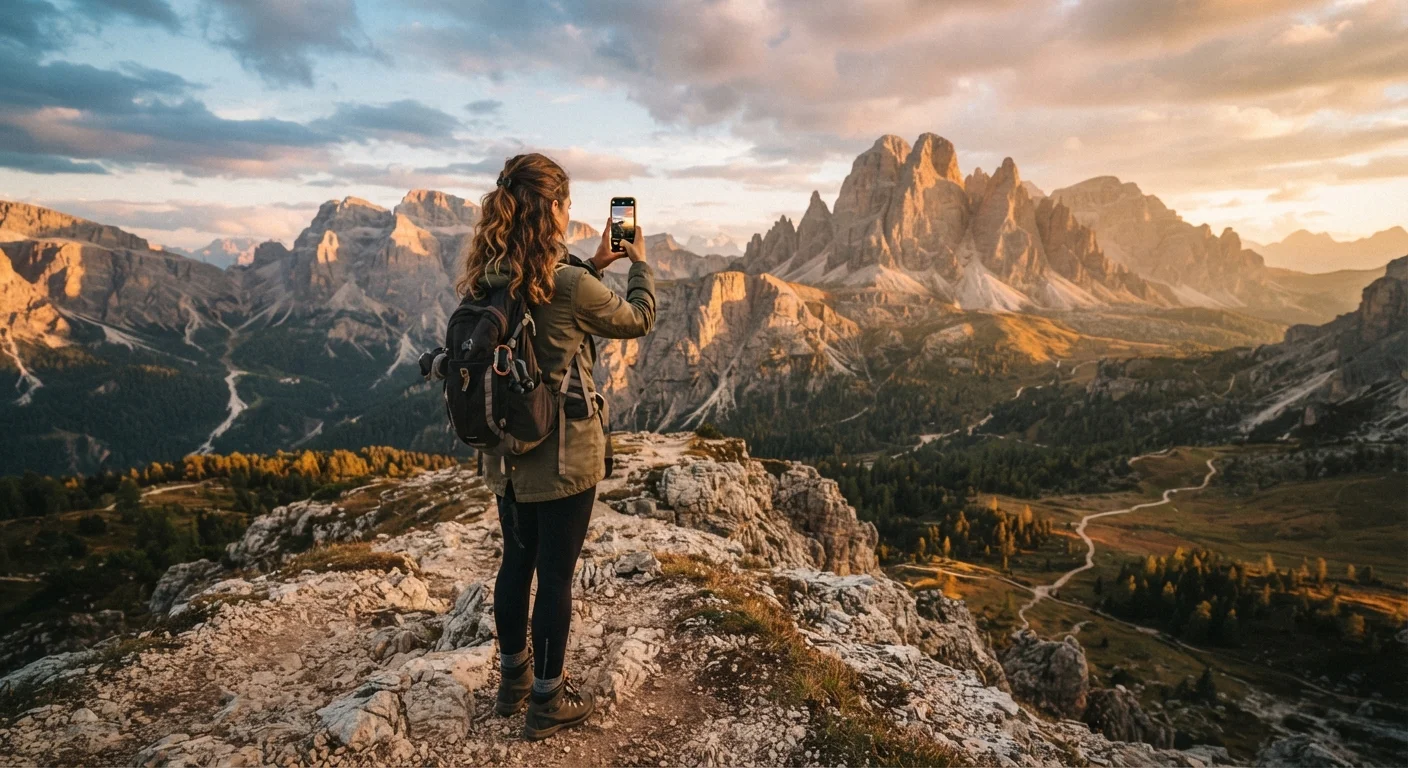
Photo: ArticleHood.com | Precision In Every Word editorial
Key Takeaways
- Photography can enrich travel memories, but over-documenting can reduce how deeply you experience a place.
- The act of framing and shooting pulls attention away from sensory, emotional, and social presence.
- Intentional limits - like a photo window or camera-free days - can restore balance without giving up documentation entirely.
- Some destinations and cultural settings actively discourage photography for ethical and practical reasons.
- The richest travel moments are often those you sit with rather than shoot.
Sharpens observation and attention to detail
Composing a shot requires slowing down and noticing light, geometry, and context - a discipline that can make travelers more attentive to their surroundings than they might otherwise be.
Creates reliable emotional memory anchors
Photographs can resurface specific sensory memories - the warmth of an afternoon, the mood of a particular street - that might otherwise fade with time.
Extends the experience beyond the trip itself
Sharing images with friends, family, or a travel community can meaningfully prolong engagement with a destination and invite others into experiences they couldn't witness directly.
Encourages return visits to overlooked details
Reviewing photos after a trip often surfaces architectural details, faces, or scenes that passed unnoticed in the moment, prompting deeper reflection on what was experienced.
Reduces how well you recall what you photographed
Studies on what researchers call the "photo-taking impairment effect" indicate that the act of shooting an object can actually reduce memory retention for that object, as the brain partly offloads the work of remembering.
Pulls focus from sensory and emotional presence
Framing, adjusting settings, and reviewing shots consumes attention that might otherwise be directed at sound, smell, taste, and the emotional weight of being somewhere new.
Creates social distance in human interactions
Raising a camera between yourself and another person transforms potential connection into documentation - a transactional dynamic that can foreclose the candid, spontaneous exchanges that define memorable travel.
Can feel compulsive rather than intentional
The reflex to photograph everything - before assessing whether a shot is worth taking - reflects habit rather than choice, and can leave travelers feeling they experienced a place through a screen.
Risks cultural insensitivity in certain destinations
Many sacred sites, local neighborhoods, and ceremonies explicitly discourage or prohibit photography; ignoring these norms causes genuine harm and marks the traveler as disrespectful regardless of intent.
The Reflex We Don't Question
It happens almost before you can think: you arrive somewhere extraordinary - a fog-draped temple, a lantern-lit alley, a coastline that drops your jaw - and the first thing you do is reach for your phone. The impulse is so ingrained that questioning it feels almost strange. But that reflex is worth examining, because every second spent framing, filtering, and posting is a second spent not being in the place that moved you enough to document it.
This isn't an argument against travel photography. Images serve real purposes: they preserve memories, help us share experiences with people we love, and can even deepen observation by training the eye. The tension isn't between photography and travel - it's between photography as a presence and photography as an escape from presence.
Travelers who want to go beyond surface-level tourism - who are drawn to the kind of experiences explored in forms of travel that rarely make the highlight reel - often find that the camera is the first thing standing between them and genuine engagement.
What Photography Actually Gives You
Sharpens observation and attention to detail
Composing a shot requires slowing down and noticing light, geometry, and context - a discipline that can make travelers more attentive to their surroundings than they might otherwise be.
Creates reliable emotional memory anchors
Photographs can resurface specific sensory memories - the warmth of an afternoon, the mood of a particular street - that might otherwise fade with time.
Extends the experience beyond the trip itself
Sharing images with friends, family, or a travel community can meaningfully prolong engagement with a destination and invite others into experiences they couldn't witness directly.
Encourages return visits to overlooked details
Reviewing photos after a trip often surfaces architectural details, faces, or scenes that passed unnoticed in the moment, prompting deeper reflection on what was experienced.
Done with intention, photography can sharpen rather than blunt a travel experience. Slowing down to compose a shot forces you to look more carefully - noticing light, texture, and context you might otherwise walk past. And for many people, photographs genuinely do serve as reliable memory anchors, surfacing emotions and sensory details years later that might otherwise have faded. There's also something to be said for the communal function: sharing images with family or friends who couldn't make the trip can extend the experience meaningfully, not just perform it.
What It Can Cost You
Reduces how well you recall what you photographed
Studies on what researchers call the "photo-taking impairment effect" indicate that the act of shooting an object can actually reduce memory retention for that object, as the brain partly offloads the work of remembering.
Pulls focus from sensory and emotional presence
Framing, adjusting settings, and reviewing shots consumes attention that might otherwise be directed at sound, smell, taste, and the emotional weight of being somewhere new.
Creates social distance in human interactions
Raising a camera between yourself and another person transforms potential connection into documentation - a transactional dynamic that can foreclose the candid, spontaneous exchanges that define memorable travel.
Can feel compulsive rather than intentional
The reflex to photograph everything - before assessing whether a shot is worth taking - reflects habit rather than choice, and can leave travelers feeling they experienced a place through a screen.
Risks cultural insensitivity in certain destinations
Many sacred sites, local neighborhoods, and ceremonies explicitly discourage or prohibit photography; ignoring these norms causes genuine harm and marks the traveler as disrespectful regardless of intent.
The costs are harder to see precisely because they accumulate invisibly. Research on what's sometimes called the "photo-taking impairment effect" suggests that the act of delegating memory to a camera can actually reduce how well people recall the objects they photographed - their minds, in a sense, outsource the remembering. Beyond cognition, there's the social cost: a lens between you and another person creates a transaction where a conversation might have been. And in places with strong cultural protocols around photography - Japan's temples and quiet neighborhoods being a notable example, as covered in our guide to cultural missteps in Japan - an ill-timed camera can transform you from a respectful guest into an intrusive presence.
~600M
Photos uploaded to the internet daily
Estimates from various digital analytics firms suggest hundreds of millions of images are shared online each day, reflecting how normalized documentation has become across all forms of experience.
Lower
Object recall after photographing vs. observing
Psychological research published in journals including Memory and Cognition has found that participants who photographed objects in museum-style settings remembered them less accurately than those who simply observed them.
Finding a Workable Balance
The goal isn't to leave the camera at home - it's to be deliberate about when it comes out. Some travelers set a "photo window" at each stop: ten or fifteen intentional minutes at the start or end, then the camera goes away. Others designate one full day per trip as camera-free, which can feel uncomfortable at first and revelatory shortly after. If you tend to over-plan itineraries as it is - a challenge worth reading about in our piece on why itineraries fall apart - layering in explicit unphotographed time can actually give the schedule breathing room.
It also helps to ask honestly: who is this photo for? If the honest answer is a social feed rather than your own memory, that's a useful signal. Trips built around a single deep interest - a cuisine, a craft tradition, a musical form - tend to produce fewer compulsive photos and more absorbed attention, because the focus is already there before the camera arrives.
The moments that stay with travelers longest are rarely the ones they got the best shot of. They're the ones they were fully inside of - the conversation that went on too long, the meal that took a wrong turn, the view they just stood in for a while. The camera can live alongside those moments. It just shouldn't replace them.
A Note on Gear and Expectations
The content on this site is for informational purposes only and is not a substitute for professional advice. Always consult a qualified professional for guidance specific to your situation.